Ben almost didn’t place a bid.
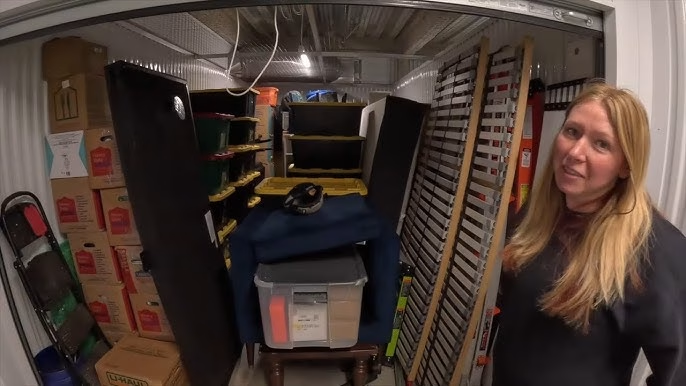
The storage unit looked like a complete disaster. There were broken chairs, dusty cardboard boxes, an old television, and several bags of clothing piled against the walls.
Nothing suggested that it contained anything valuable.
But the starting bid was just $500.
Ben had developed a hobby of purchasing abandoned storage units, sorting through their contents, and occasionally finding interesting collectibles.
He believed that even an ordinary-looking unit could contain something unexpected.
So he placed his bid.
He won.
And within an hour of opening the unit, he noticed something that didn’t make sense.
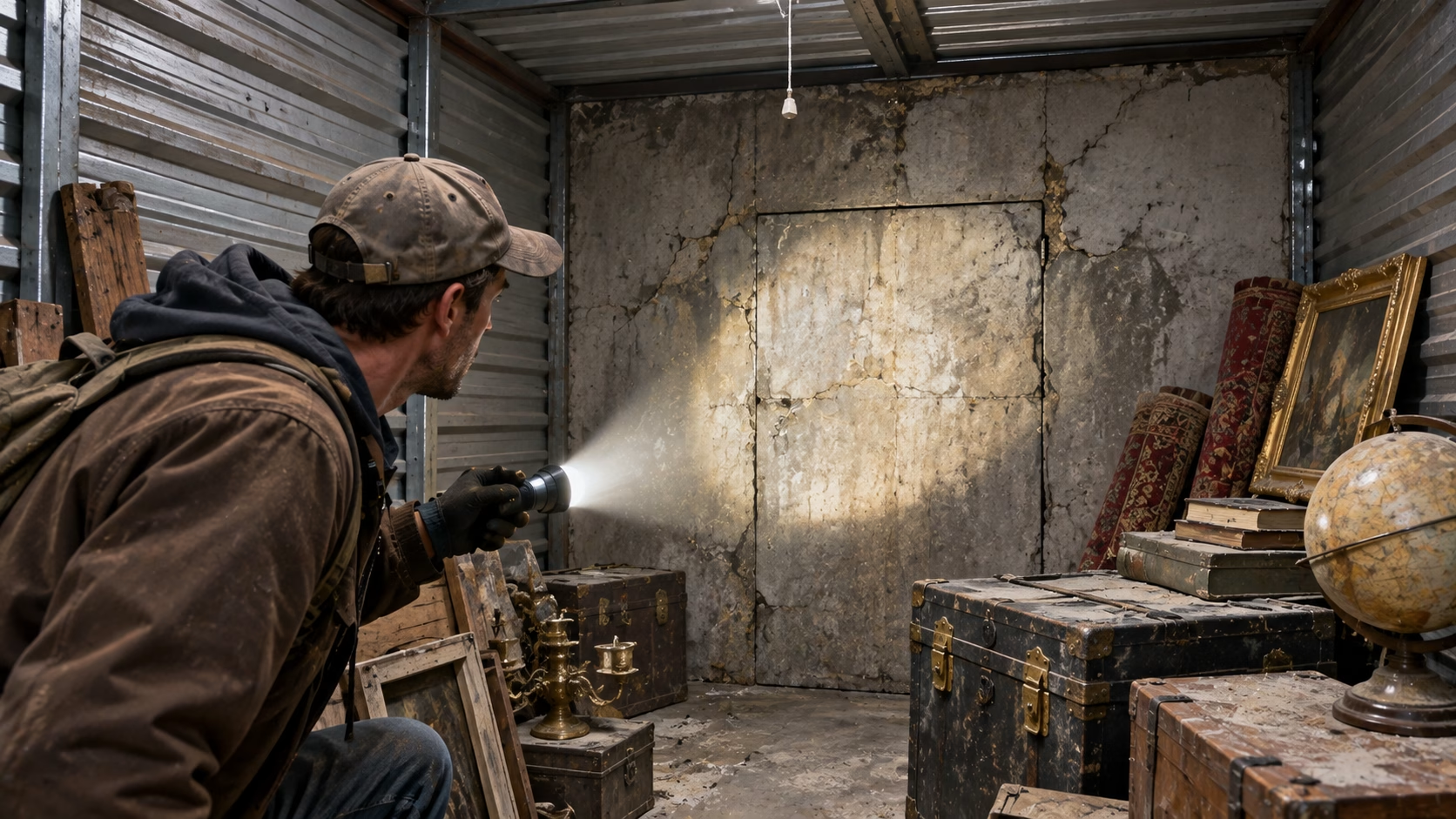
The back wall appeared to be much thicker than the other walls.
The First Look Inside
The unit was located inside an old storage facility on the outskirts of town.
When Ben opened the metal door, a cloud of dust rose from the floor.
The contents were exactly what he expected from the outside.
There was a damaged television, three wooden chairs, a suitcase, several boxes of kitchen items, and an assortment of old tools.
He began sorting everything into separate piles.
Most items were ordinary household belongings.
Some were damaged beyond repair.
A few were worth keeping.
But when Ben moved a tall wooden cabinet away from the back wall, he noticed a strange line running vertically through the paint.
It looked like a seam.
He touched the surface.
The wall sounded slightly different in that section.
Something Behind the Wall
Ben initially thought it was a repair patch.
Storage facilities often contain reinforced sections, electrical panels, and structural supports.
Still, the shape seemed unusual.
He measured the wall and discovered that the unit was considerably shorter on the inside than its exterior dimensions suggested.
There was a difference of approximately two feet.
That was enough to make him curious.
He contacted the facility manager and explained what he had noticed.
The manager checked the building plans and confirmed that the wall was supposed to be solid.
There was no additional room listed behind it.
Ben decided not to damage anything.
Instead, he requested permission to have the structure inspected.
The Unexpected Discovery
A qualified contractor examined the wall a few days later.
After reviewing the building plans and checking for electrical and structural hazards, the contractor identified a concealed section that appeared to have been added during an earlier renovation.
It was not a secret underground chamber or a hidden treasure room.
But it was definitely unusual.
The contractor found that the storage unit had originally been part of a larger commercial space.
At some point, a previous owner had installed an additional partition wall, creating a narrow unused cavity.
The cavity had apparently remained sealed for years.
Ben was fascinated.
He had purchased the unit expecting old furniture and forgotten belongings. Instead, he had uncovered evidence of an earlier version of the building.
What Was Left Behind?
Once the area had been safely assessed and access was approved, the contractor examined the cavity.
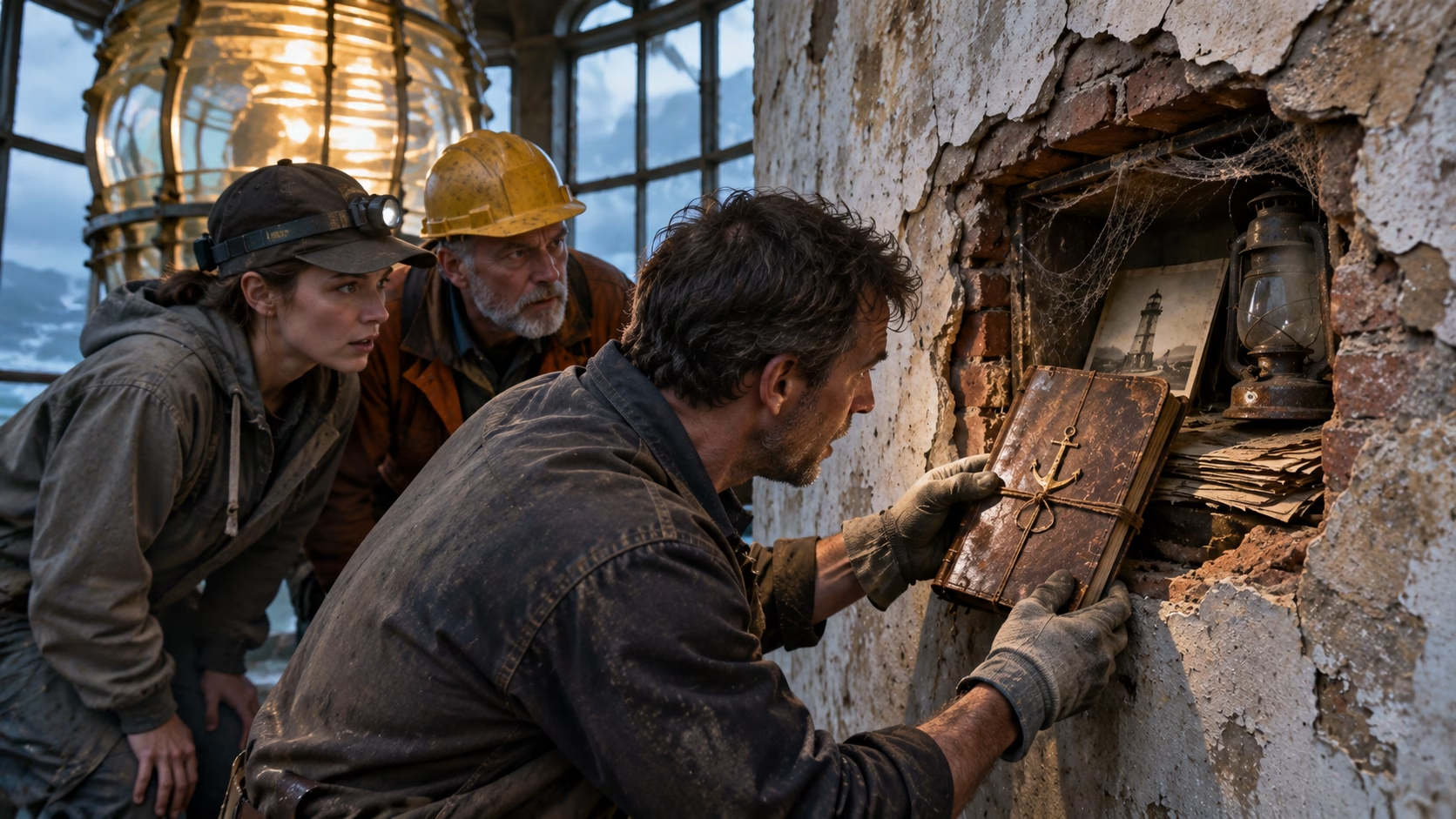
Inside were several old wooden panels, a small metal toolbox, and a stack of documents protected by a deteriorating plastic cover.
The documents appeared to relate to the property’s former use.
There were maintenance notes, hand-drawn measurements, and a few receipts from a business that had operated in the building decades earlier.
Nothing indicated that the cavity had been used to conceal valuable possessions.
But the papers provided an unexpected glimpse into the building’s history.
One document even included a rough floor plan showing how the commercial space had been divided before the storage facility was created.
Ben compared the drawing with the current layout.
The mysterious wall suddenly made sense.
The Real Value of the $500 Purchase
By the end of the week, Ben had sorted through the original contents of the unit.
He kept a few vintage items, donated usable furniture, and disposed of the damaged belongings responsibly.
The hidden section turned out to be more interesting as a historical discovery than a financial one.
There was no gold, no forgotten fortune, and no dramatic secret room.
But Ben had learned something that made the entire purchase worthwhile.
Buildings have histories that are rarely visible from the outside.
A wall can hide an older layout. A cupboard can cover an original doorway. A forgotten storage space can preserve documents from a business that disappeared decades earlier.
Ben later posted photographs of the discovery online.
People were fascinated by the difference between what the unit looked like initially and what the contractor found behind the partition.
His $500 purchase hadn’t made him rich.
But it had revealed a piece of the building’s past that might otherwise have remained unnoticed.
And perhaps that is what makes abandoned storage units so interesting.
You never really know which forgotten detail will turn an ordinary purchase into an unexpected discovery.