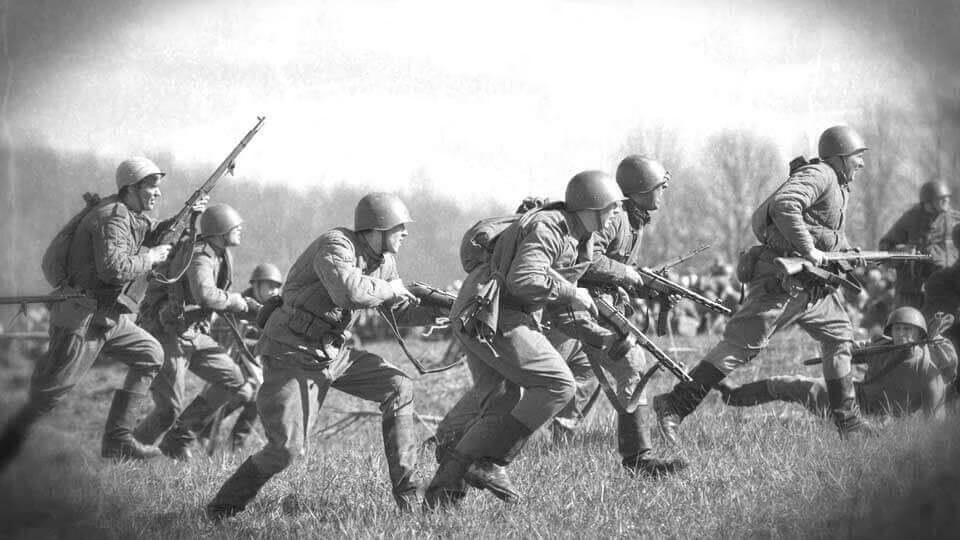
World War II was one of the most significant and devastating conflicts in human history. Fought between 1939 and 1945, the war involved dozens of countries and resulted in the loss of millions of lives. While the immediate consequences included widespread destruction and economic hardship, the long-term effects of World War II continue to shape modern society in profound ways. From international politics and technological innovation to social change and economic development, the war left a lasting legacy that continues to influence the world today.
A New Global Political Order
One of the most important impacts of World War II was the transformation of global politics. Before the war, several European powers dominated international affairs. However, the conflict weakened many of these nations economically and militarily.
Following the war, two superpowers emerged: the United States and the Soviet Union. Their rivalry led to the Cold War, a period of political tension and competition that lasted for decades. This struggle influenced international relations, military alliances, and foreign policies across the globe.
The war also spurred the development of international organizations aimed at maintaining peace and preventing future conflicts. The establishment of the United Nations in 1945 remains one of the most significant outcomes of the war. The organization continues to promote diplomacy, humanitarian assistance, and international cooperation.

Advances in Technology and Science
World War II accelerated technological and scientific innovation on an unprecedented scale. Governments invested heavily in research and development to gain military advantages, resulting in breakthroughs that later benefited civilian life.
Radar technology improved significantly during the war and eventually became essential for aviation, weather forecasting, and navigation systems. Advances in aviation led to faster and more efficient air travel after the war.
Medical science also benefited from wartime research. Improved surgical techniques, antibiotics, and emergency medical care practices saved countless lives and laid the foundation for modern healthcare systems.
One of the most notable technological developments was the creation of early computers. Machines developed to assist military operations and code-breaking efforts eventually evolved into the sophisticated computer technologies that power modern society.
Economic Transformation and Growth
The war reshaped global economies in numerous ways. While many countries experienced severe destruction, post-war reconstruction efforts stimulated economic growth and modernization.
Large-scale rebuilding projects created jobs, improved infrastructure, and encouraged industrial expansion. In several countries, economic recovery programs helped rebuild cities, transportation networks, and public services.
The post-war period also saw the rise of international trade and economic cooperation. Nations recognized the importance of stable economic relationships in preventing future conflicts and promoting prosperity.
Many of the world’s strongest economies today were significantly influenced by reconstruction and development initiatives launched after World War II.
Changes in Women’s Roles
World War II brought major social changes, particularly regarding the role of women in society. During the war, millions of men left their jobs to serve in the military, creating labor shortages across various industries.
Women entered the workforce in large numbers, taking on roles in factories, transportation, healthcare, and government services. They demonstrated their ability to perform jobs traditionally reserved for men.
Although many women returned to domestic roles after the war, their contributions challenged existing gender norms and inspired future movements for equality. The experience helped lay the groundwork for increased participation of women in education, business, and politics.
Today, many advances in gender equality can be traced back to the societal changes that occurred during World War II.
Human Rights Awareness
The horrors of World War II, including genocide, forced labor, and mass civilian casualties, prompted the international community to place greater emphasis on human rights.
The discovery of atrocities committed during the war shocked the world and highlighted the need for stronger protections against discrimination, persecution, and abuse.
In response, governments and international organizations worked to establish legal frameworks that promoted human dignity and justice. The adoption of the Universal Declaration of Human Rights in 1948 marked a major milestone in global efforts to protect individual freedoms and fundamental rights.
These principles continue to influence international law and social justice movements today.
Decolonization and National Independence
World War II weakened many colonial powers and encouraged independence movements throughout Asia, Africa, and other regions. Colonized populations increasingly demanded self-government and freedom from foreign control.
In the decades following the war, numerous countries gained independence and established sovereign governments. This process dramatically reshaped the global political landscape and expanded the number of nations participating in international affairs.
The wave of decolonization helped promote national identity, self-determination, and political representation for millions of people around the world.
Military and Security Developments
The war changed how nations approached defense and security. Governments invested heavily in military modernization and intelligence gathering to prepare for future threats.
The development of nuclear weapons introduced a new era of global security concerns. The destructive power demonstrated during the war influenced military strategies and international diplomacy for generations.
Many modern defense systems, military alliances, and security policies originated from lessons learned during World War II and its aftermath.
Cultural and Educational Influence
World War II has had a lasting impact on culture, literature, film, and education. Countless books, documentaries, museums, and memorials have been dedicated to preserving the memory of the conflict.
The war serves as an important subject in schools and universities, helping students understand the consequences of conflict, intolerance, and authoritarianism. Lessons from the war continue to shape discussions about democracy, leadership, and global citizenship.
By studying the experiences of World War II, societies gain valuable insights into the importance of peace, cooperation, and respect for human rights.
Conclusion
The impact of World War II on modern society extends far beyond the battlefield. The conflict transformed global politics, accelerated technological innovation, stimulated economic growth, advanced human rights, and reshaped social structures worldwide. Its influence can be seen in international institutions, scientific advancements, gender equality movements, and modern security systems.
Although the war caused immense suffering and destruction, it also led to important changes that continue to shape contemporary life. Understanding its legacy helps us appreciate the value of peace, cooperation, and collective efforts to build a better future for generations to come.