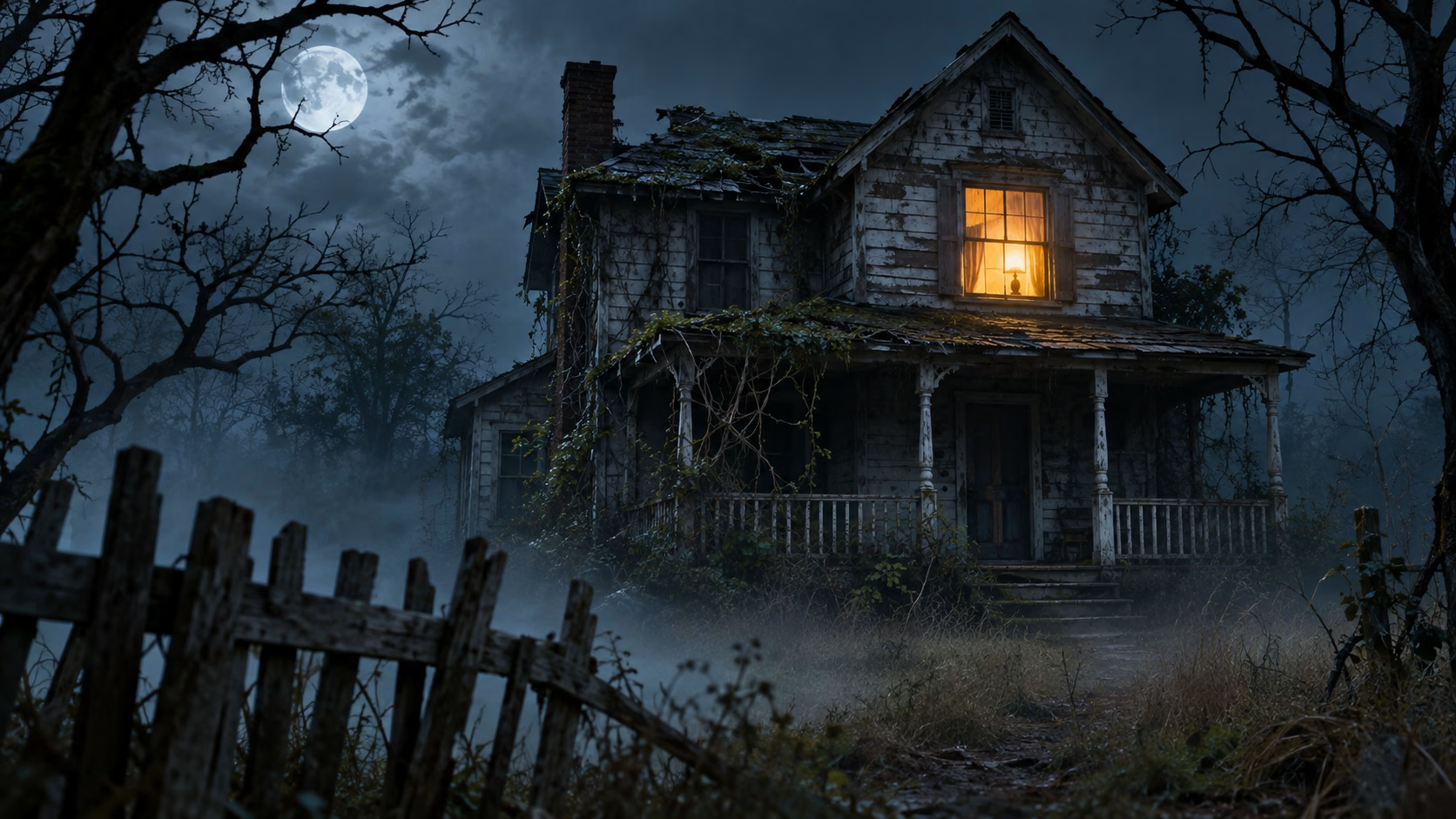
For nearly thirty years, the lighthouse stood empty.
Its white paint had faded, the metal staircase had begun to rust, and the windows were covered in layers of dust.
Visitors occasionally photographed it from the cliffs, but few knew the story of the man who had once lived there.
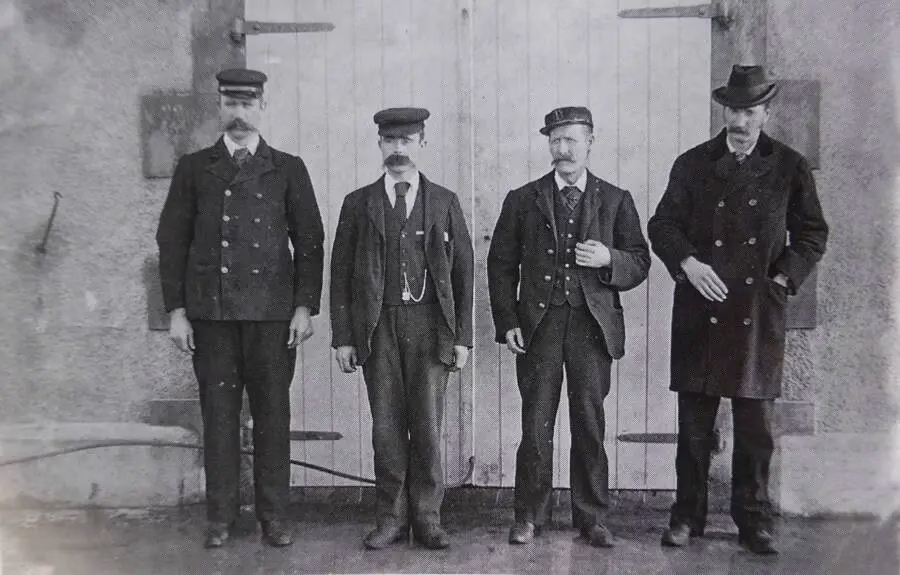
His name was Arthur.
He had worked as a lighthouse keeper for many years before disappearing under circumstances that were never fully understood.
There were no confirmed reports of where he went. No farewell letter. No explanation.
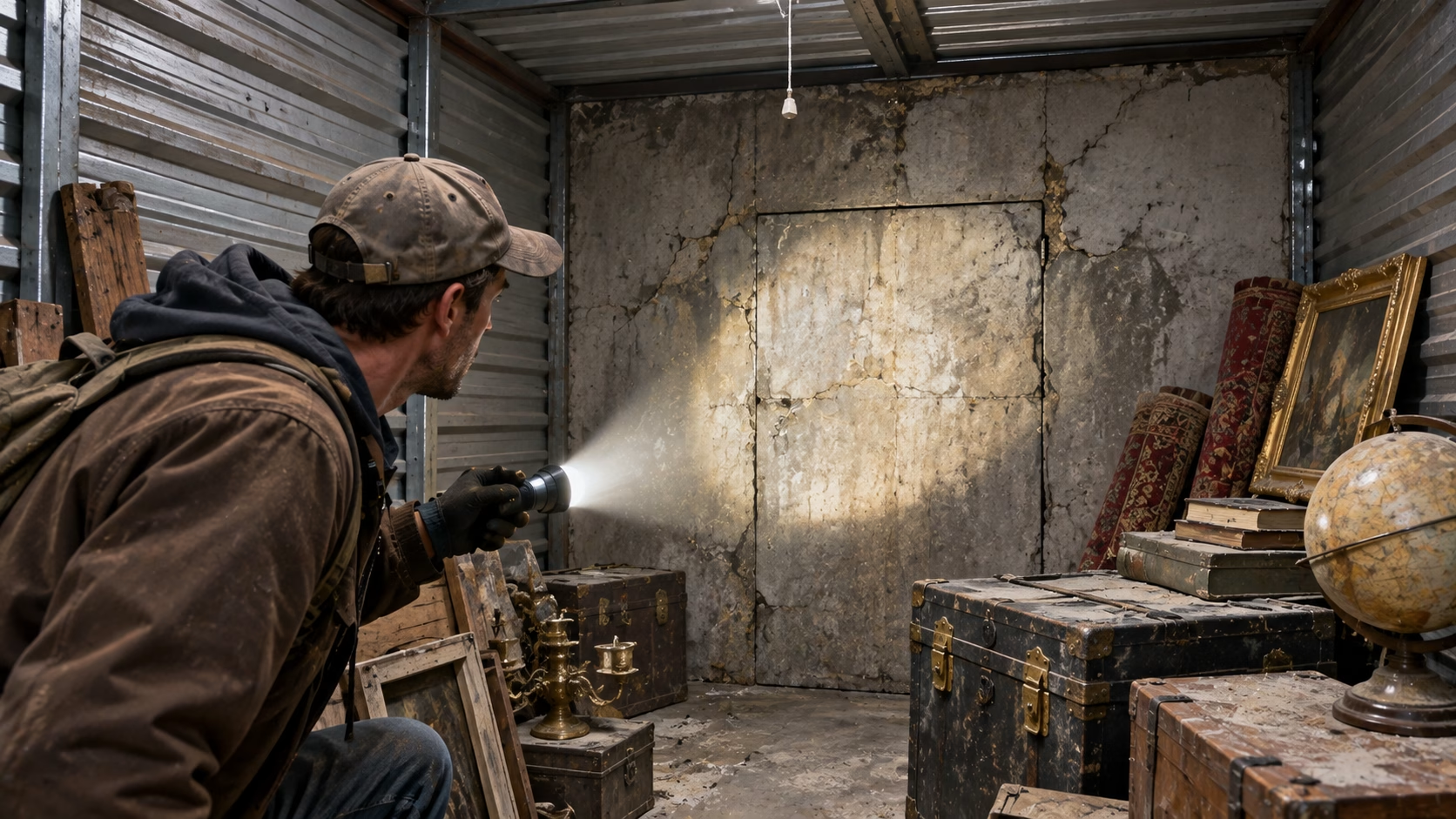
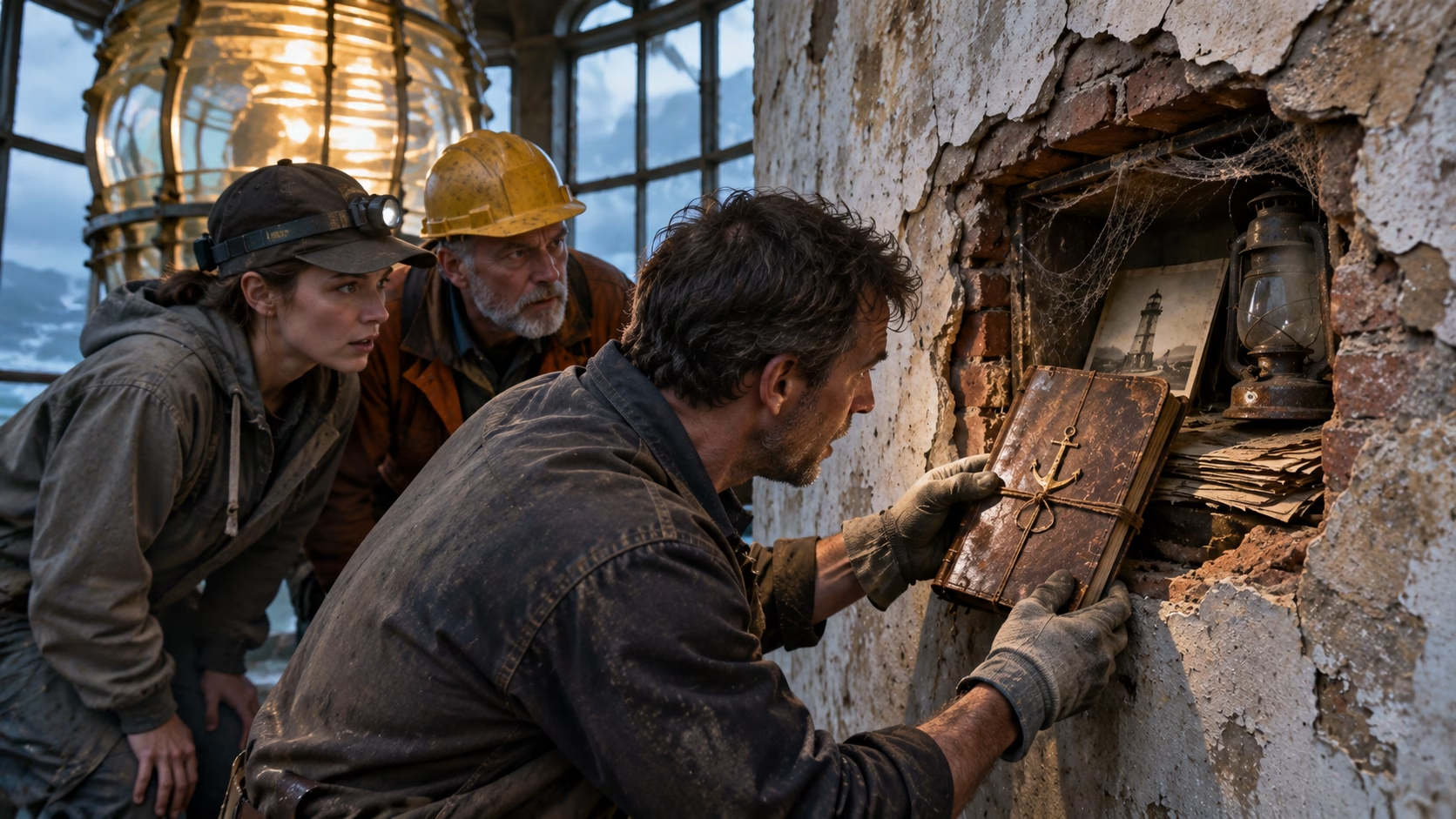
Then, during renovation work, a construction team discovered something hidden inside one of the lighthouse walls.
A small wooden compartment.
Inside it was a leather-covered journal.
And the final pages contained a series of entries that nobody expected to find.
The Man Who Watched the Sea
Arthur had reportedly spent much of his adult life working at the lighthouse.
The job was demanding.
He had to maintain the lighting equipment, monitor weather conditions, record passing vessels, and ensure that the warning light remained operational.
The lighthouse was located on a rocky coastline, several kilometres from the nearest village.
It was a quiet place.
Most days passed without anything unusual happening.
But people who knew Arthur described him as someone who enjoyed keeping detailed records.
He wrote about the weather, the sea, visiting boats, and even small changes in the surrounding landscape.
His journals were apparently a personal habit.
After he disappeared, the lighthouse was eventually closed.
The building remained untouched for decades.
The Renovation Begins
Years later, a local preservation group decided to restore the structure.
The plan was to repair the staircase, strengthen the interior walls, replace damaged windows, and preserve as much of the original architecture as possible.
During the renovation, a worker noticed that one section of the wall sounded hollow.
It was located near a narrow staircase leading toward the upper observation room.
At first, the team thought it might be an old maintenance cavity.
But after consulting the restoration plans, they discovered that the space did not appear in the original drawings.
A closer inspection revealed a small wooden panel covered by layers of old paint.
Behind it was a compartment.
Inside sat a leather journal wrapped in faded fabric.
The Journal’s First Pages
The journal was carefully removed and handed to the preservation group.
Its earliest entries were ordinary.
Arthur wrote about strong winds, rough seas, passing ships, repairs to the lighthouse equipment, and occasional visits from people living in the nearby village.
The handwriting was neat and consistent.
Some pages contained small sketches of the coastline.
Others included observations about unusual weather patterns.
The journal offered a fascinating look into the daily life of someone who had spent years working in isolation.
But as the team approached the final section, the tone began to change.
The entries became shorter.
Several dates were missing.
And Arthur began referring repeatedly to a particular light appearing beyond the coastline.
The Light That Appeared Twice
One entry described seeing a distant light shortly after midnight.
Arthur initially believed it was a passing vessel.
However, he noted that the light appeared in approximately the same location on several consecutive nights.
He wrote down the times and weather conditions.
A later entry mentioned that the light seemed to disappear whenever the lighthouse beam swept across that section of the water.
This observation caught the attention of the historians examining the journal.
Was Arthur describing a ship?
A reflection?
A navigation light from another part of the coastline?
Nobody could immediately identify the source.
The entries were interesting, but there was no independent evidence confirming what Arthur had seen.
The Final Pages
The last few pages were especially intriguing.
Arthur wrote about an upcoming maintenance visit and mentioned that he had discovered something unusual near the lower storage room.
Unfortunately, the journal did not explain exactly what he had found.
One sentence appeared repeatedly in slightly different forms:
“Someone has been here before the morning inspection.”
The final dated entry was brief.
It mentioned a strong storm, a delayed supply boat, and an intention to finish writing the following evening.
There were no more entries after that.
The journal simply ended.
What Happened to Arthur?
The discovery renewed interest in the lighthouse keeper’s disappearance.
Local historians began reviewing old records, photographs, and newspaper archives.
They found references to the lighthouse’s operational history and the changes that had taken place along the coast.
However, the journal alone could not explain why Arthur disappeared.
There were several possible explanations.
He may have left the position voluntarily. He may have relocated after the lighthouse was closed. The final entries may have reflected ordinary concerns associated with working in an isolated location.
Without reliable records, it was impossible to establish a definitive account.
The restoration team preserved the journal and included it in the lighthouse’s historical collection.
The building itself was eventually reopened for visitors.
Today, people can explore the staircase, look out across the coastline, and learn about the generations of lighthouse keepers who once worked there.
But the journal remains the most intriguing discovery associated with the property.
A man spent years recording the smallest details of his surroundings.
Then, suddenly, he stopped.
And decades later, the pages he left behind gave the world another glimpse into a life that might otherwise have been forgotten.
Perhaps the biggest mystery isn’t the strange light Arthur described.
It’s the final chapter of his story—one that the journal never got the chance to finish.