The participation of women in politics has transformed societies around the world. Over the past century, women have fought tirelessly for the right to vote, hold public office, and influence policymaking. Their growing presence in political leadership has brought new perspectives to governance and contributed to more inclusive decision-making. Despite significant progress, women continue to face numerous challenges in the political arena. Understanding both the achievements and obstacles of women in politics is essential for promoting gender equality and strengthening democratic institutions.
The Historical Struggle for Political Representation
For much of history, political systems were dominated by men, and women were excluded from decision-making processes. The fight for women’s political rights gained momentum during the late nineteenth and early twentieth centuries through suffrage movements worldwide.
Women organized campaigns, protests, and advocacy efforts demanding equal voting rights. Their persistence led to landmark victories in many countries, allowing women to participate in elections and eventually run for public office. These achievements laid the foundation for greater political representation and opened doors for future generations of female leaders.

Progress in Political Participation
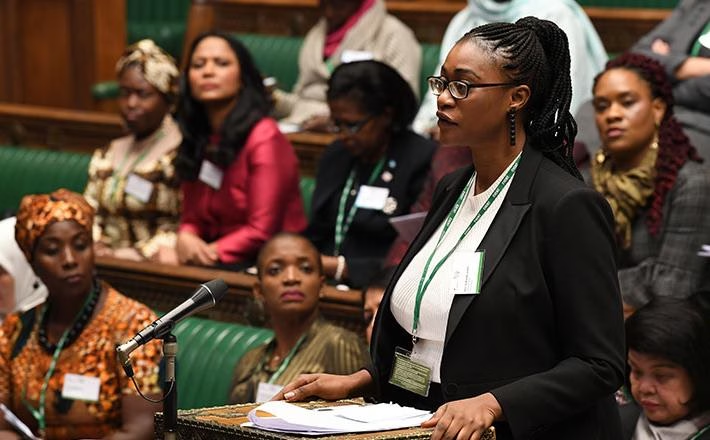
Today, women hold political positions at local, national, and international levels. Many countries have elected female presidents, prime ministers, governors, and legislators. Women’s representation in parliaments and government institutions has steadily increased, reflecting changing societal attitudes toward gender roles.
The rise of women in politics has helped challenge stereotypes that leadership is primarily a male responsibility. Female politicians have demonstrated their ability to manage complex issues, lead governments, and contribute effectively to public policy.
Increased representation also ensures that a broader range of voices and experiences are considered when making decisions that affect society.
Achievements of Women in Politics
One of the most significant achievements of women in politics is their contribution to policies that promote social welfare, education, healthcare, and gender equality. Female leaders have often championed initiatives focused on family support, child welfare, equal opportunities, and community development.
Women in political leadership have played vital roles in advancing legislation that addresses workplace discrimination, domestic violence, reproductive rights, and access to education. Their advocacy has improved the lives of millions and encouraged governments to consider issues that may have previously been overlooked.
Additionally, female politicians serve as role models for young women and girls. Seeing women occupy positions of power inspires future generations to pursue leadership opportunities and participate actively in civic life.
The Importance of Diverse Leadership
Diversity in political leadership strengthens democratic systems by bringing different perspectives and experiences into decision-making processes. Women often approach policy challenges from unique viewpoints shaped by their social, economic, and personal experiences.
Research has shown that diverse leadership teams are better equipped to address complex societal issues and develop balanced solutions. When women participate in politics, governments are more likely to reflect the needs and interests of the entire population.
Gender-balanced political institutions also promote fairness and equality, helping to build public trust and confidence in government.
Challenges Women Continue to Face
Despite substantial progress, women remain underrepresented in political leadership positions worldwide. Several barriers continue to limit their participation and advancement.
Gender Stereotypes
One of the most persistent challenges is the existence of gender stereotypes. Women are often judged differently than men when seeking leadership roles. Society may question their competence, leadership style, or ability to balance family responsibilities with political careers.
These stereotypes can discourage women from entering politics and create additional obstacles during election campaigns.
Limited Access to Resources
Political campaigns require significant financial and organizational resources. Women frequently face greater difficulties accessing funding, political networks, and mentorship opportunities compared to their male counterparts.
Limited access to these resources can make it harder for women to compete effectively in elections and advance within political parties.
Harassment and Discrimination
Many women in politics experience harassment, discrimination, and personal attacks. These challenges can occur both online and offline, creating hostile environments that discourage political participation.
Female politicians are often criticized for their appearance, family life, or gender rather than for their policies and qualifications. Such treatment can undermine confidence and limit opportunities for advancement.
Balancing Multiple Responsibilities
Women often carry a larger share of family and caregiving responsibilities, which can create additional challenges when pursuing demanding political careers. Long working hours, frequent travel, and public scrutiny can make balancing professional and personal obligations particularly difficult.
Supportive workplace policies and family-friendly political environments are essential for increasing women’s participation in public life.
The Role of Education and Mentorship
Education plays a critical role in empowering women to engage in politics. Access to quality education helps develop leadership skills, political awareness, and confidence. Civic education programs can encourage women and girls to participate actively in democratic processes.
Mentorship is equally important. Experienced female leaders can provide guidance, support, and encouragement to aspiring politicians. Strong mentorship networks help women navigate challenges and build successful political careers.
Political parties, educational institutions, and civil society organizations all play important roles in fostering female leadership.
Looking Toward the Future
The future of women in politics appears promising as more countries adopt policies to increase gender representation. Electoral reforms, leadership training programs, and initiatives promoting equal opportunities are helping to create more inclusive political systems.
Technology and social media have also provided women with new platforms to engage with voters, raise awareness about important issues, and build political movements. These tools can help overcome some traditional barriers to participation.
Continued efforts to eliminate discrimination, promote equality, and support female leadership will be essential for achieving lasting progress.
Conclusion
Women in politics have achieved remarkable progress over the past century, breaking barriers and reshaping political landscapes around the world. Their contributions have strengthened democratic institutions, expanded representation, and improved policymaking. However, challenges such as gender stereotypes, limited resources, and discrimination continue to affect women’s political participation.
By promoting equal opportunities, encouraging leadership development, and creating supportive political environments, societies can ensure that women have an equal voice in shaping the future. Greater participation by women in politics benefits not only women themselves but also communities, governments, and democracy as a whole.